While working as a veterinarian in London, it struck
me that while most cats there are living in the lap
of luxury, their wild cousins here in Africa are having
a much harder time of it. Their habitat is shrinking
due to urban development and farming and increasingly
they clash with humans. In the last three years we
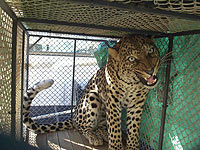
have lost at least 17 Leopards to hunting and trapping
in the greater Baviaanskloof and Addo area. This is
a horrible death, as they are either hounded by dogs
and then shot, dying in terror after a long chase,
or end up having a limb crushed in a gin- trap, with
gangrene setting in.
Although the Cape Leopard is extremely stealthy,
and holes up in the inaccessible mountainous areas
of the Baviaanskloof Wilderness, reports at Skilderkrantz
indicate that they have rapidly decreased in numbers
over the past year or so. Whatever anyone tells you,
the Cape Mountain Leopard, the African Wild Cat and
even the Caracal, are under threat!
But all is not bad news. Increasingly, people are
realizing that our human lives are impoverished by
the inexorable extinction of our fellow creatures.
It was Chief Seattle who said: “For what is
man without the beasts? If all the beasts where gone,
man would die from a great loneliness of the spirit.
For whatever happens to the beasts, happens to man.
All things are connected.”
Bool Smuts, director of our partner
organization, The Landmark Foundation, has together
with many others worked tirelessly to get the Leopard
Project off the ground. This Project has four legs:
1. Save, rehabilitate and
re-locate
This involves
a network of volunteer veterinarians, pilots, sympathetic
farmers and South African National Parks officials
who spring in to action when a report of a trapped
or injured leopard comes in. Time is of the essence
in these cases, as wild animals are extremely susceptible
to the physiological effects of stress. See Breaking
News for the latest dramatic rescue!
2. Extension of Leopard habitat
through projects such as Skilderkrantz
The Baviaanskloof
Megareserve must go on expanding!!! More and more
land must be brought out of farming, which is inappropriate
in this area anyway, into conservation. There will
always be an edge between conservation and farming,
so no.1 above will always be necessary to some degree.
However, my dream is to see the day when our Baviaans
Leopards no longer have to be taken away for release
in Addo.
3. Research and Farmer Outreach
Studies need to be carried
out to find out exactly what is what in our Leopard
world, all the better to help. Examples of this are
monitoring of animals by tracking collars and infrared
camera. We also need to determine exactly what losses
farmers are experiencing (see 4 below).
4. Predator Friendly Meat
Labelling
Heard of dolphin friendly
tuna and badger friendly honey? Well then, why not
predator friendly meat? We all know that the supermarkets
are consumer-demand driven, so you all have more power
than you realize.
By insisting that the meat
you eat has not caused unnecessary suffering in its
production, (nor harm to the environment), you can
bring about change. This is true of course of all
food. Write to the supermarkets and tell them how
you feel.
The way this scheme will work
is that farmers who comply with predator friendly
management methods will be compensated for their losses
to predators by a small premium on the meat they sell.
This will be subsidized by you, the responsible and
mature consumer. Substantial rewards will be offered
to farm workers and other locals who report transgressions
by accredited farmers. This is the only way the system
can be successfully policed.
Many say it can’t be
done, but let’s keep working for Predator Friendly
labelling until we reach the Holy Grail.